
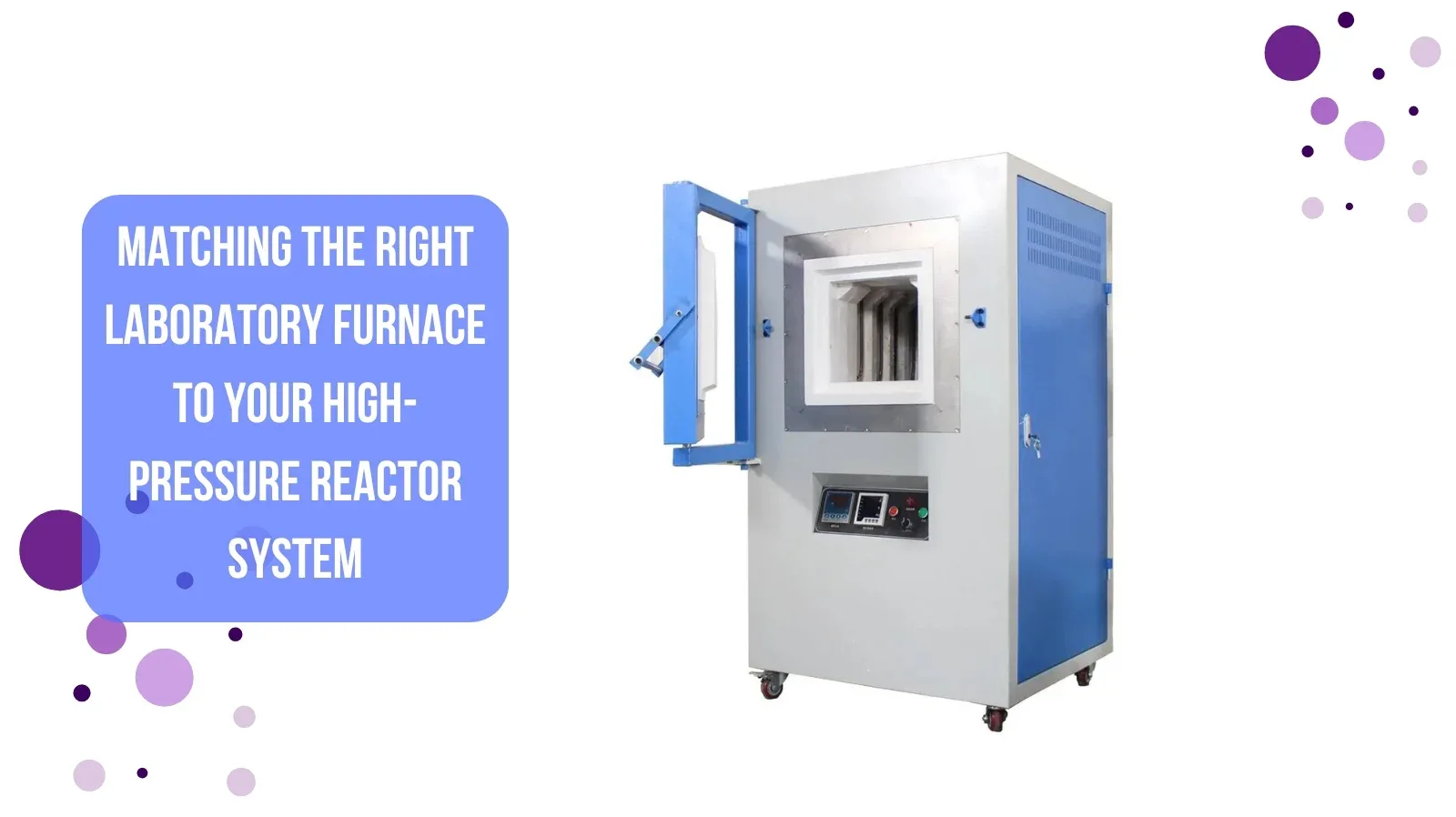
Your high-pressure reactor is essential for your process. However, without the right heating system, its performance may be inadequate. The furnace is not just a simple heater; it is a vital component that impacts the safety, accuracy, and reproducibility of your reactions.
Selecting the correct furnace is crucial, as choosing the wrong one can result in temperature fluctuations, slow heating rates, or even safety hazards. This guide aims to help you choose the ideal laboratory furnace for your high-pressure reactor system.
Key Considerations for a Perfect Match
The aim is to find a furnace that meets the specific requirements of your reactor, rather than simply fitting around it. Focus on these four critical areas:
Temperature Range and Uniformity
Range: Your Lab furnace should comfortably exceed the maximum temperature required for your process. When choosing a furnace, it’s advisable to select one with a maximum temperature at least 50 to 100°C higher than what your application requires. This ensures a safety margin and prevents the furnace from operating at its maximum capacity.
Uniformity: Crucial to furnace performance. A furnace with poor uniformity can result in hot and cold spots within the reactor vessel, resulting in inconsistent reaction kinetics and unreliable data. Therefore, it is essential to choose furnaces that explicitly state their temperature uniformity, such as ±5°C over the work zone at the desired setpoint.
Thermal Performance and Heat-Up Rate
Power Density: For dynamic processes, a furnace that heats up quickly is crucial. The power density (measured in watts per square inch) of the heating elements influences how quickly the stove can reach your desired temperature setpoint. Slow ramp rates can lead to wasted time and may negatively impact specific reactions.
Compatibility with Controller: The Lab Furnace should be used with a precise PID controller that regulates the heating rate and minimizes temperature overshoot, which is essential for sensitive syntheses.
Physical Configuration and Safety
Split-Body vs. Tube Furnaces: For high-pressure reactors with internal stirrers and complex headplates, a split-body (clamshell) furnace is typically required. It allows for easy installation and removal of the reactor. Tube furnaces are suitable for simpler, tubular flow reactors.
Internal Chamber Dimensions: The furnace chamber must be spacious enough to fit the reactor vessel and its fittings. It is crucial to ensure sufficient clearance to prevent damage to the heating elements and to accommodate the reactor’s thermal expansion.
Safety Features: The furnace should be rated for the required temperatures and constructed with durable insulation. Look for additional features such as over-temperature protection (which includes a separate safety thermostat) and durable hinges and latches.
Material and Chemical Compatibility
Consider the lab environment. Will the furnace be exposed to corrosive fumes? If so, you may need a stove with a sealed casing or elements protected by an inert atmosphere.
A Critical Factor: Integrating Controls
To achieve optimal performance, it is essential to integrate the furnace controller with your reactor’s central control system. Isolated controls can lead to operational complexity and increased risks. The optimal configuration enables you to program and monitor both the reactor and furnace temperatures from a single interface, ensuring a smooth and safe process.
Conclusion: An Integrated System for Reliable Results
The laboratory furnace is more than just an accessory; it is the essential component that drives your high-pressure reactions. Treating it as an afterthought compromises the integrity of the entire system.
By carefully matching the furnace’s temperature uniformity, thermal performance, physical configuration, and control integration to the specific demands of your high-pressure reactor, you invest in more than just hardware. You invest in reproducible data, operational safety, and consistent, high-quality results. Choosing the right components is essential to ensuring your reactor system functions as a cohesive unit rather than just a collection of individual parts.
Your Next Step: Consult with a specialist who understands both reactors and heating systems. Please provide the dimensions of your reactor, along with the maximum temperature, pressure, and the desired ramp rates. This information will help us recommend a furnace that is ideally suited to your needs.