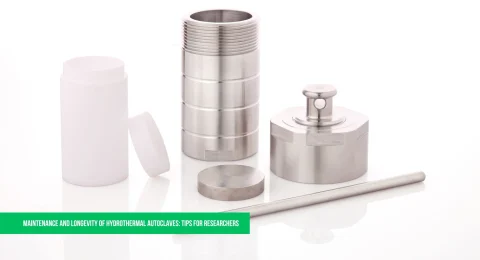

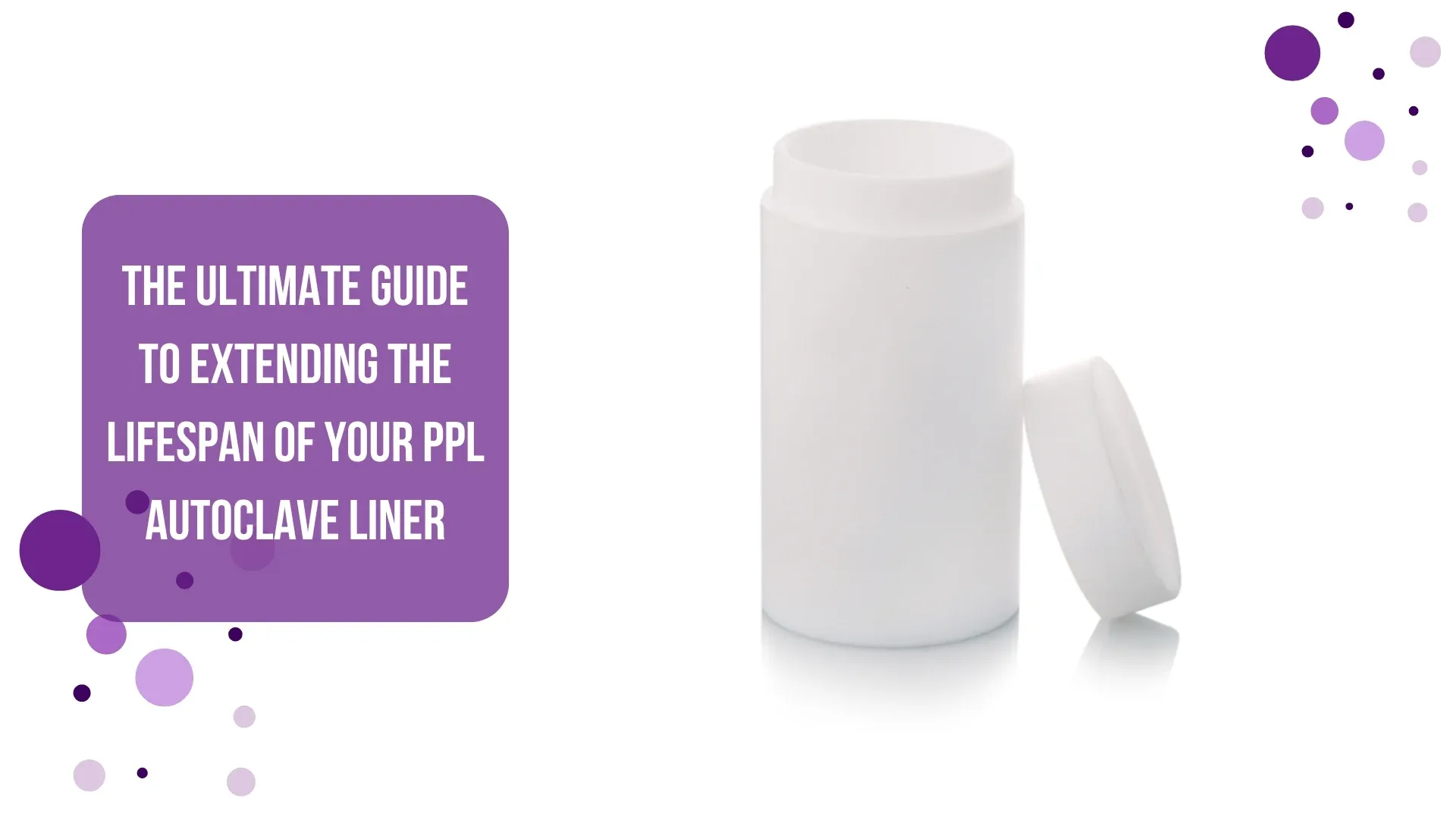
If you work in high-temperature synthesis, the PPL (Polyphenylene Polymer) lined hydrothermal autoclave is likely your workhorse. Unlike standard white PTFE (Teflon) liners that soften around 220°C , the black PPL liner pushes your capabilities up to 280°C .
PPL liners cost more and can be brittle. Cracks mean replacement, lost time, and safety risks.
But don’t worry, most PPL liner failures are preventable. To help you protect your investment, let’s transition to the essential maintenance, cleaning, and storage practices that will maximize your liner’s lifespan.
The Golden Rule: Avoid Thermal Shock
The main cause of PPL liner failure is often due to impatience, not chemical corrosion.
PPL expands and contracts differently from steel. Fast cooling stresses the liner.
- The Risk: This mismatch creates immense internal stress, leading to hairline cracks or shattering.
- The Protocol: Never quench a hot liner. Let it cool naturally or cool it in the oven at less than 5°C/min.
- Pro Tip: If you are running multiple cycles a day, consider acquiring extra liners to rotate them rather than accelerating the cooling process for a single liner.
Cleaning Protocols: Acid vs. Solvent
Residue forms hot spots that degrade the liner.
For Inorganic Synthesis (Zeolites, Metal Oxides)
If you are synthesizing metal oxides, you may end up with stubborn crusts on the walls.
- Use a mild acid wash. Dilute nitric acid or aqua regia under 100°C for 1–2 hours is effective.
- Don’t: Never use metal brushes or steel wool. Scratches on the inner surface act as nucleation sites for cracks. Use a soft bottle brush or a sponge.
For Organic/Solvothermal Synthesis
- Do: Rinse immediately with an appropriate solvent (Ethanol, Acetone) that dissolves your specific reactants.
- Don’t: let the solvent sit for days. Prolonged exposure can still affect PPL.
The “Immediate Clean” Rule
Leaving a reaction mixture in the liner overnight is a common bad habit.
- Cross-Contamination: Chemicals can diffuse into the micropores of the polymer surface over time.
- Hardening: Precipitates that harden upon cooling can become nearly impossible to remove without physical force (which we want to avoid).
The Fix: Make it a lab SOP (Standard Operating Procedure) that the reactor must be emptied and rinsed immediately upon reaching a safe handling temperature.
Watch Your Filling Factor.
Overfilling is dangerous for you, but it is also lethal for the liner.
When liquids are heated in a sealed vessel, they expand. If you exceed the recommended filling factor (usually 80%), the liquid has nowhere to go. The internal pressure becomes hydraulic rather than vapor pressure.
The Result: The PPL liner will deform irreversibly. Once a liner loses its perfect cylindrical shape, it will no longer seal correctly against the reactor cap, leading to leaks.
Smart Storage
Proper storage is as important as proper use.
Do This:
Store the liner dry, upright, and open to the air to prevent moisture accumulation. Ensure the storage location is clean, dust-free, and away from corrosive chemicals.
Keep it in a dedicated drawer or rack where it will not be bumped or compressed by other items. Ensure the storage area is reserved for liners only.
Inspect the sealing rim before every use.
Avoid this:
Storing the liner wet or sealed, damp (encourages mold/degradation)
Toss it in a bin with heavy steel parts.
Ignoring small nicks on the rim (this causes leaks).
Conclusion
A PPL liner is a precision tool, not just a container for chemicals. By respecting its thermal limits, cleaning it promptly and gently, and adhering to the 80% fill rule, you can significantly extend its operational lifespan.
Handle your PPL liner with care to achieve consistent, contamination-free outcomes at 280°C for numerous cycles.