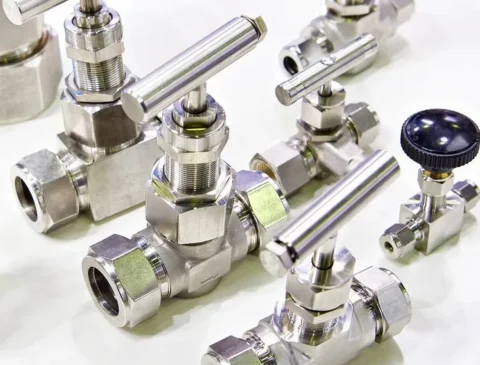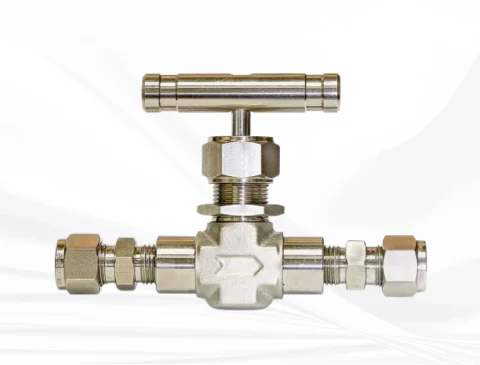

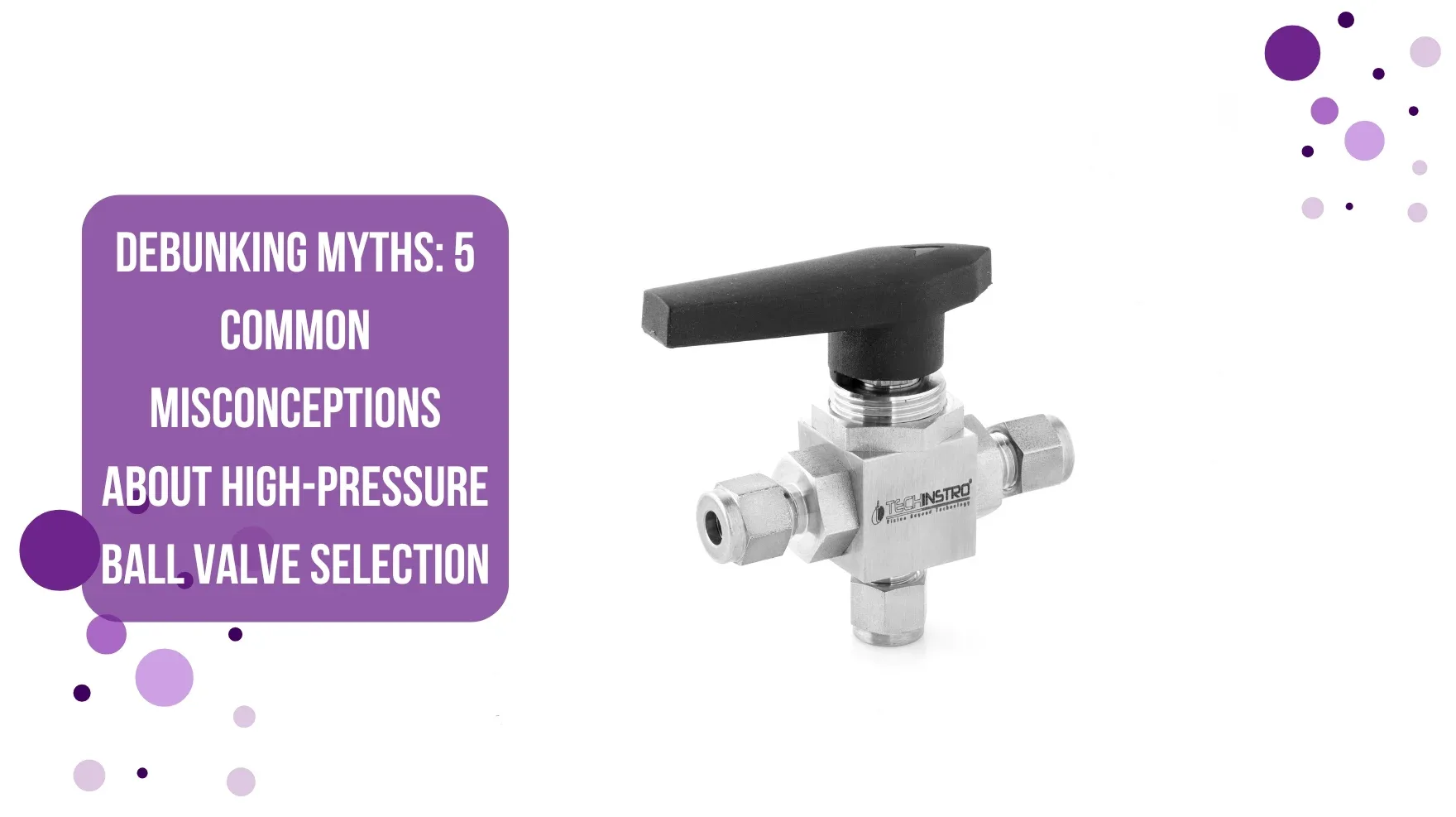
Choosing the right high-pressure ball valve impacts safety, efficiency, and costs. Common myths can lead to costly mistakes.
Let’s cut through the confusion and debunk five damaging misconceptions.
1: A Higher-Pressure Rating is Always Better and Safer
The trap: It may seem logical that selecting a valve rated for 10,000 PSI would provide greater safety in a 6,000 PSI system than choosing one rated for 7,500 PSI.
The truth: Consistently choosing the highest rating leads to over-engineering and resource waste without additional value.
- A higher-pressure valve is heavier, bulkier, and constructed from thicker, more costly materials, leading to unnecessary expense for unused capacity.
- Higher-pressure valves often have a larger ball-to-bore ratio, which increases flow resistance and reduces flow (Cv) compared to a valve designed for your intended pressure. This results in diminished efficiency for excess safety.
- Choose a valve rated for your system’s pressure with the proper safety factor. Don’t always pick the highest class.
2: All Trunnion-Mounted High Pressure Ball Valves Are Created Equal
The Trap: Believing that any trunnion-mounted ball valve performs simply because of its design label.
The Truth: Design details matter. All trunnion-mounted valves are not equal, even if they share the basic concept.
- Seat Technology: How is the seat (the sealing surface between the ball and the valve body) energized? Is it by simple spring force, or a combination of springs and system pressure? A self-relieving seat design (which allows built-up pressure to escape) is critical for safety, preventing pressure lock between seats.
- Stem Sealing: A single set of gland packing (material that seals around the stem where it exits the valve body) is insufficient. Look for a multi-stage stem sealing system (e.g., primary seal, secondary seal, emergency injection seal), which guarantees zero fugitive emissions (unintended leaks), especially with volatile or hazardous media.
- Body and end connections: Is the valve constructed as a three-piece, two-piece, or single-piece body? In high-pressure applications, welded end connections are typical, but weld preparation and procedure quality are critical. Inadequate welding on a high-integrity valve body poses a significant risk of failure.
3: Metal-Seated Valves Can’t Achieve Bubble-Tight Shut-Off
The Trap: People think soft-seated valves seal best and metal one’s leak.
The Truth: Modern metal-seated valves can seal as well as soft seats, even in tough conditions.
- The Application: Soft seats fail in heat or abrasion. Only metal seats work here.
- The Technology: Advanced metal-seated valves use super-hard coatings (such as Stellate—a cobalt-chromium alloy, tungsten carbide, or chrome oxide) lapped to a mirror finish. They are designed with precise preload mechanisms (systems that apply constant force) that ensure the ball and seat are in tight contact, achieving API 598/ISO 5208 Leakage Rate Class IV or better (defined as ‘bubble-tight’ shut-off) when new and after cycles.
- The trade-off: These valves may require higher initial torque and come at a higher upfront cost, yet deliver fire-safe, long-term reliability where soft seats would not be suitable.
4: If It Holds Pressure in a Hydrotest, It’s Good for Life
A factory hydrotest only shows current integrity, not future performance.
The Truth: The hydrotest (pressurizing the valve with water to check for leaks and strength) is a baseline, not a lifetime guarantee. It proves structural integrity at that moment.
- Cyclic Fatigue: Valve failure comes from pressure cycles, not just single tests. Match cycle life to your needs.
- Material Degradation: Corrosion (gradual destruction by chemical reaction), erosion (wear by fluid flow), hydrogen embrittlement (metal weakening from hydrogen absorption), and cracking in sour service (environments with hydrogen sulfide, H₂S) happen over time. The hydrotest doesn’t predict this.
- Ask for rated cycle life and material compatibility for your process, not just a hydrotest result.
5: Actuator Selection is a Secondary Concern; Just Get One That Fits.
The Trap: Many Focus on the valve, treating the actuator as just an add-on.
The Truth: In high-pressure use, the actuator is critical. Undersized actuators lead to valve failure.
- High Torque: High-pressure, metal-seated valves require robust actuators to avoid stalling.
- Fail-Safe Requirements: In the event of power or air loss, must the valve fail open, fail closed, or remain in place? The fail-safe mechanism (spring-return or hydraulic accumulator) must be robust and correctly sized. A weak soring on a high-pressure, high-torque valve is useless.
- Integration: The actuator (device that moves or controls the valve) must be matched to the valve’s torque curve (graph showing torque required at different positions) and include necessary controls for partial stroking (moving the valve partway for testing), position indication, and diagnostics, especially for IIoT-enabled (Industrial Internet of Things, remote monitoring) predictive maintenance strategies.
Conclusion: Shift from Assumption to Analysis
Selecting a high-pressure valve requires analysis, not old rules.
- Specify for your needs, not an abstract maximum.
- Look beyond the generic product name to the specific sealing, stem, and connection technology. Choose seat material (soft or metal) based on the process temperature and chemistry.
- Ask for cycle life and material data, not just a hydrotest certificate.
- Treat the actuator as an integral, purpose-fitted part of the valve.
By challenging myths and examining actual performance under pressure, you move from making a purchase to making a reliable, safe, and cost-effective investment. The optimal valve is not simply the one with the highest numerical rating, but the one designed for your specific requirements.