
Pressure and Temperature Ratings
The most critical starting point is the Pressure-Temperature (P-T) rating.
High pressure is rarely constant; it fluctuates with heat. You must ensure the valve is rated for your system’s maximum potential pressure at its highest operating temperature.
The Trap: A valve rated for 10,000 PSI at room temperature may only handle 6,000 PSI at.
The Fix: Always consult the manufacturer’s P-T curves rather than relying on the max PSI stamped on the body.
Material Compatibility
Chemical compatibility is about more than just the fluid; it’s about the environment. If your valve handles corrosive chemicals or operates in a salty offshore environment, standard stainless steel might not cut it.
SS 316: The industry standard for general corrosion resistance.
Exotic Alloys: Consider Monel, Hastelloy, or Inconel for sour gas (H2S) or high-acid environments to prevent stress corrosion cracking.
The Flow Coefficient (Cv)
Precision is the primary reason to use a needle valve. To get that precision, you need to calculate the Flow Coefficient (Cv), which represents the volume of flow at a given pressure drop.
Too Large: You lose the ability to make fine adjustments (the needle effect).
Too Small: You create a bottleneck in your system, causing unnecessary pressure loss.
Stem and Seat Design
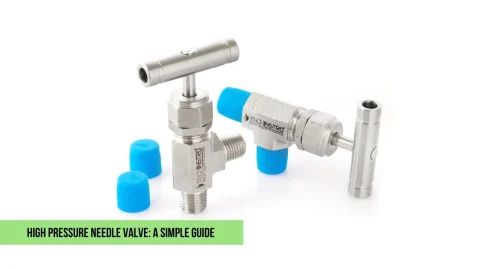
In high-pressure scenarios, the “business end” of the valve, the stem, comes in three main varieties:
Regulating Stems: Feature a fine taper for extremely precise flow control.
Vee/Shut-off Stems: Designed for a mix of throttling and a leak-tight seal.
Non-Rotating Stems: In high-pressure use, a non-rotating stem is preferred because it prevents galling (metal-on-metal friction) between the needle and the seat, significantly extending the valve’s life.
Packing Material and Leak Prevention
The packing is the seal around the stem that prevents the fluid from escaping into the atmosphere. Under high pressure, this is a common point of failure.
PTFE: Excellent for chemical resistance and low friction, but limited by temperature.
Graphite: The go-to for high-temperature applications.
Fugitive Emissions: If you are working with hazardous gases, look for valves certified for low fugitive emissions to stay compliant with environmental safety standards.
Comparison Summary
When you look at these five factors as a whole, they form a hierarchy of system integrity. At the foundation, Pressure-Temperature ratings and Material selection are your non-negotiables for safety; if these aren’t matched perfectly to your media and environment, the valve risks catastrophic failure or rapid corrosion. Once safety is guaranteed, the focus shifts to performance through the Flow Coefficient (Cv) and Stem design, which determine how much control you actually have over your process. While a regulating stem allows for micro-adjustments, the ensures the valve isn’t undersized for the task. Finally, the Packing material acts as your last line of defense, ensuring that the precision you’ve engineered stays inside the pipes rather than leaking into the atmosphere. Balancing these elements ensures you aren’t just buying a component, but rather a long-term solution for your high-pressure system.
Conclusion
Specifying a high-pressure needle valve isn’t just about picking apart from a catalog; it’s about understanding the physics of your system. By prioritizing the P-T ratings and material compatibility, you secure the safety of your site. By refining your stem choice, you ensure the precision of your process.
Investing the time to specify correctly today saves you from the “three horsemen” of fluid systems: leaks, downtime, and replacement costs.
Buy Now: