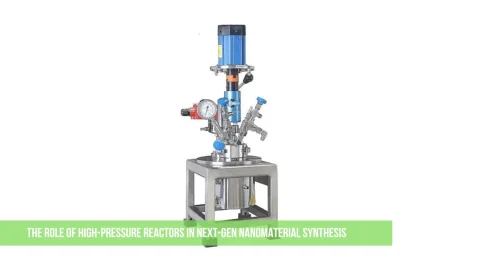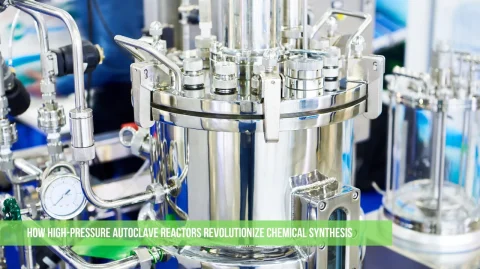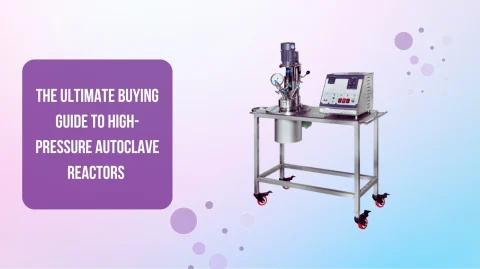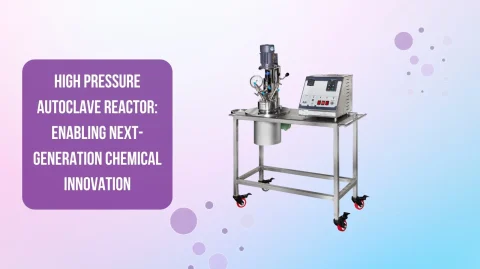
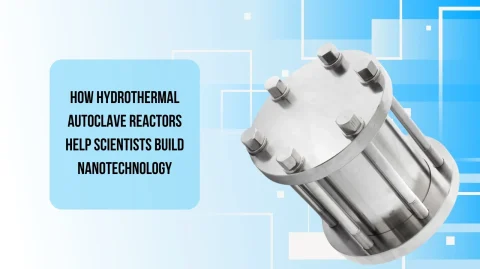
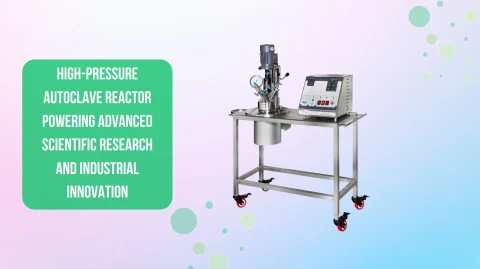

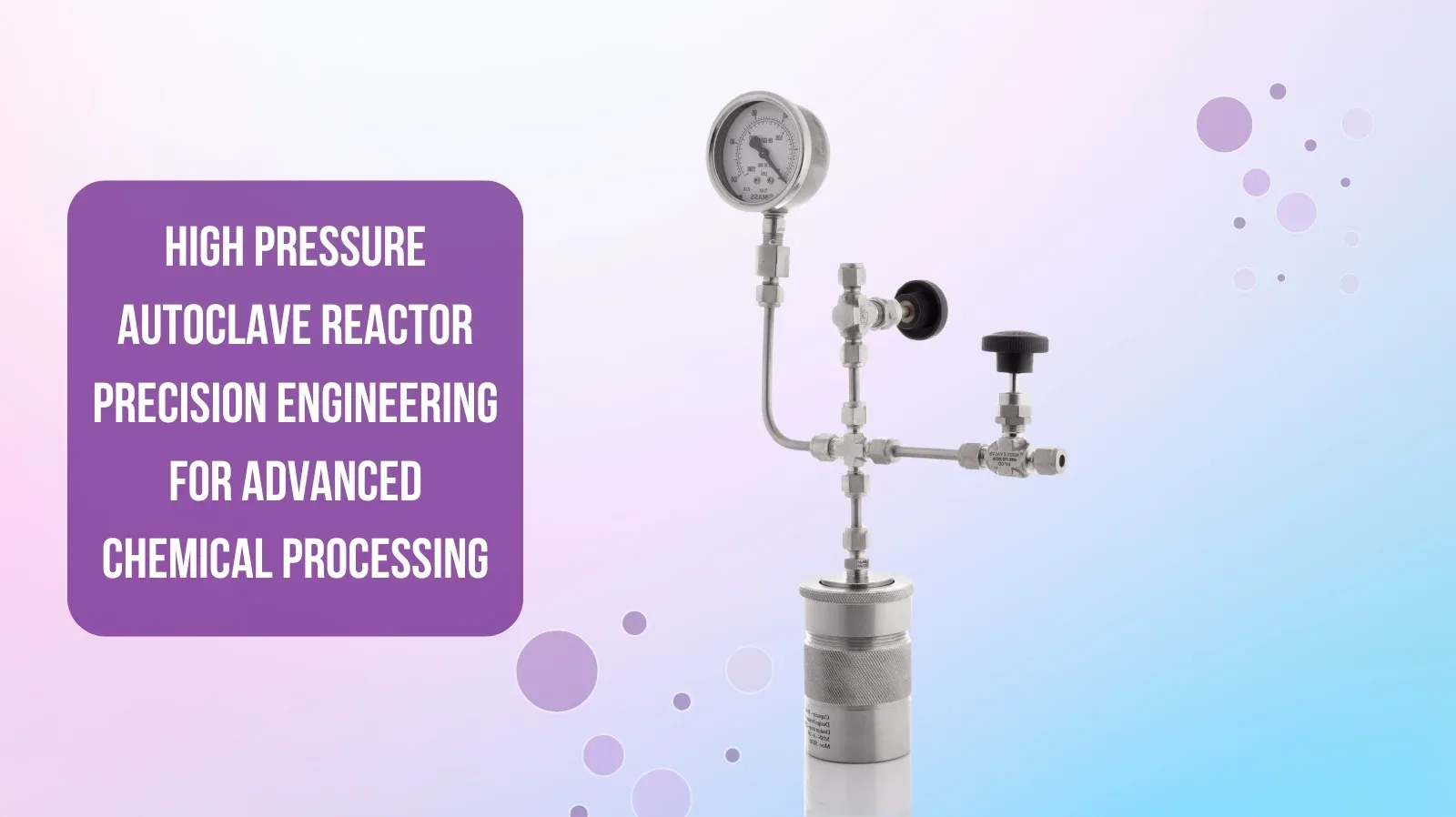
In modern chemical and material research, reaction environments often demand conditions far beyond atmospheric limits. The High Pressure Autoclave Reactor is engineered to meet these demands by offering a controlled, high-integrity system capable of operating under extreme pressure and temperature conditions.
Designed for performance, safety, and adaptability, these reactors serve as a cornerstone for industries requiring high-purity synthesis, reproducibility, and process optimization.
High Pressure Autoclave Reactor’s Design Philosophy
these reactors are built on three core principles:
- Structural Integrity – To withstand extreme mechanical stress
- Process Control – To ensure precision and repeatability
- Operational Safety – To protect both the user and the process
Each unit is manufactured with high-grade metallurgy and engineered sealing systems to maintain leak-proof and stable operation over extended cycles.
Core Functional Capabilities
Controlled High-Pressure Environment
The reactor enables chemical transformations at elevated pressures, significantly enhancing reaction kinetics and enabling processes that are otherwise not feasible under ambient conditions.
Thermal Stability and Uniform Heating
Uniform heat distribution is achieved through advanced heating systems such as mantle heaters or jacketed designs. This ensures consistent thermal exposure, critical for sensitive and multi-phase reactions.
Dynamic Mixing Performance
Efficient mixing is essential for reaction uniformity. Depending on the application, reactors can be equipped with:
- Magnetically coupled stirrers for leak-free operation
- Mechanically driven agitators for high-viscosity systems
- Variable speed drives for process flexibility
Material Versatility
To accommodate diverse chemical environments, reactors are available in multiple material configurations:
- Stainless Steel (SS304 / SS316) for general applications
- Hastelloy and Inconel for highly corrosive or high-temperature systems
- PTFE / PPL linings for ultra-pure and chemically aggressive processes
Sealing and Closure Systems
Advanced sealing mechanisms ensure zero leakage under high pressure:
- Bolt-type closures for high-pressure industrial applications
- Clamp-type systems for quick lab-scale operations
- Metal-to-metal or gasket-based sealing depending on pressure ratings
Instrumentation and Control
Modern autoclave reactors integrate intelligent control systems, including:
- Digital PID temperature controllers
- Pressure gauges and transmitters
- PLC-based automation systems
- Data acquisition and logging interfaces
These systems provide real-time monitoring and allow precise adjustment of process parameters.
Distinguished Features
- High-pressure ratings with robust vessel construction
- Wide temperature operating range for versatile applications
- Corrosion-resistant materials and optional inert linings
- Flexible configurations for lab-scale to pilot-scale setups
- Automation-ready systems for process scalability
- Long operational life with minimal maintenance
Industrial and Research Applications
High Pressure Autoclave Reactors are extensively utilized in:
- Specialty Chemicals – High-pressure synthesis and reaction optimization
- Pharmaceutical R&D – API development and stability testing
- Energy Sector – Hydrogenation and fuel research
- Nanotechnology – Controlled particle synthesis
- Academic Institutions – Experimental and pilot-scale studies
Performance Advantages
- Accelerates reaction rates under controlled environments
- Enhances product purity and consistency
- Enables safe handling of volatile and reactive substances
- Supports scalable process development from lab to industry
- Reduces experimental variability with precise control systems
Conclusion
The High Pressure Autoclave Reactor is more than just a reaction vessel—it is a precision-engineered solution for complex chemical challenges. By combining strength, safety, and intelligent control, it empowers researchers and industries to push the boundaries of innovation.
Its adaptability, durability, and high-performance capabilities make it an essential asset for any advanced laboratory or production facility.